Lost Art
-
Client
Tate / Channel 4 / ISO Design
-
Category
Project Management, Software development
When a work of art is physically destroyed, is the meaning lost with it? Does the act introduce a new meaning?
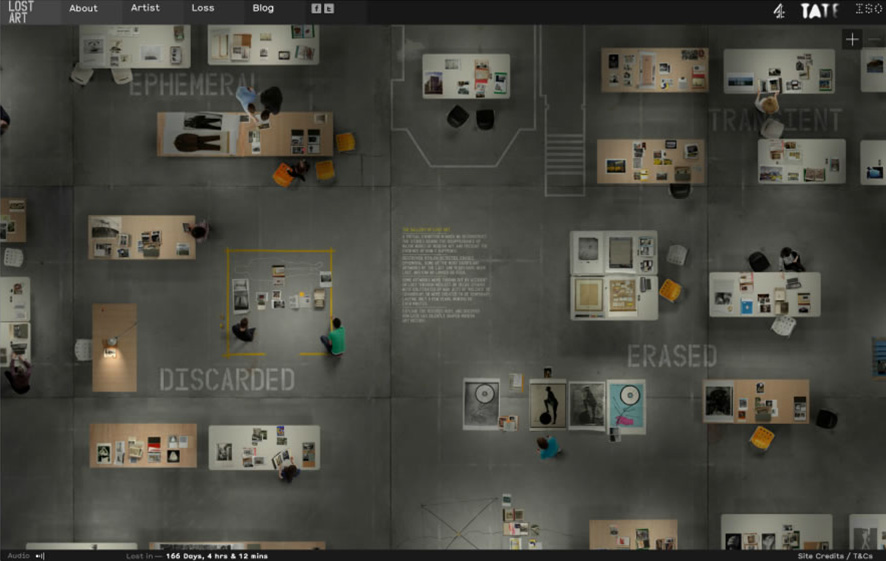
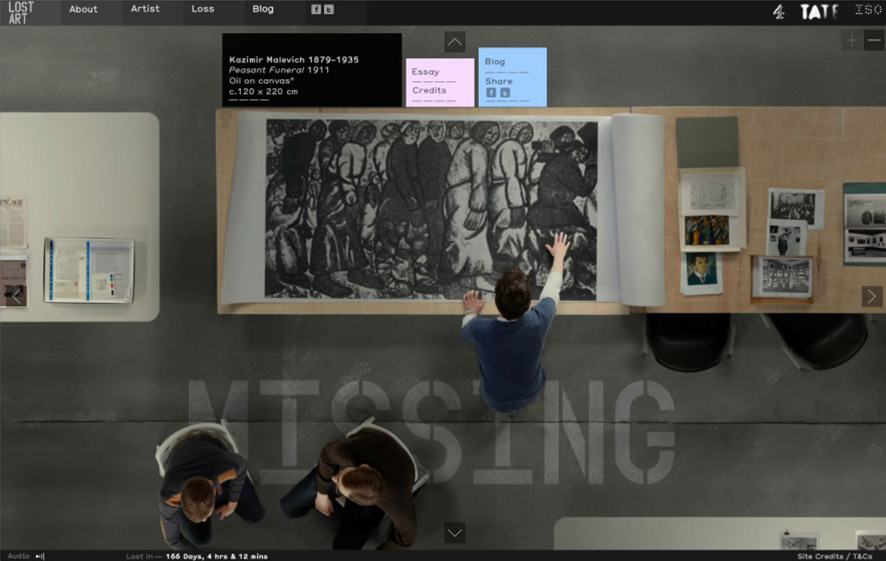
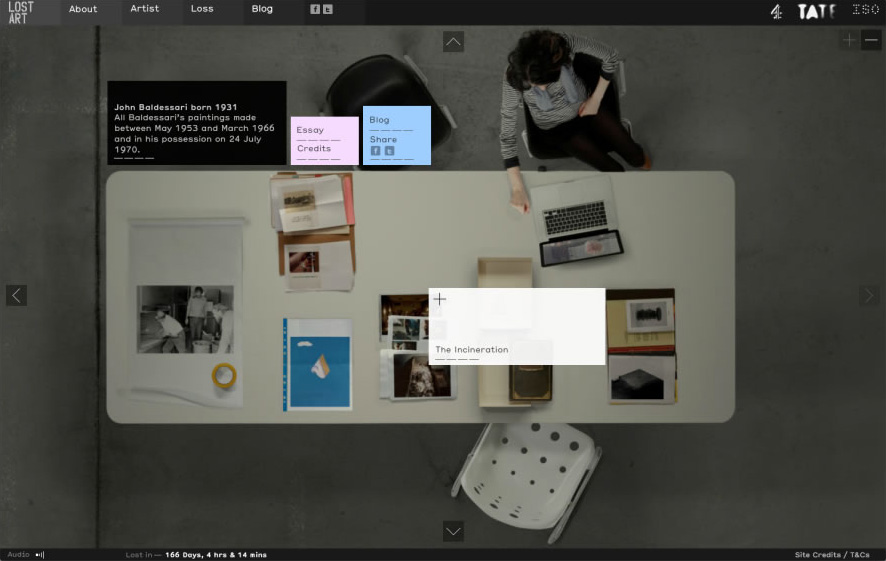
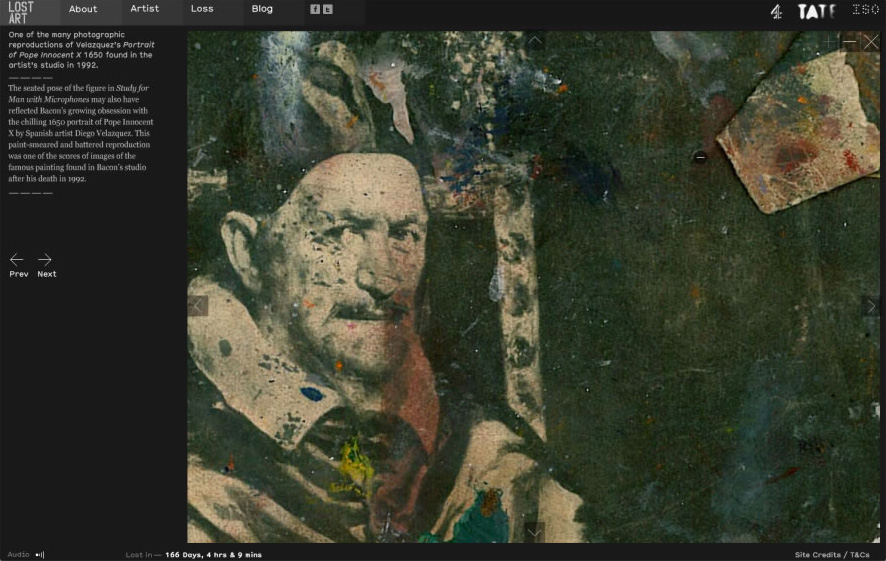
Lost Art was an online exhibition commissioned through a collaboration between the Channel 4 Innovation Fund and Tate Modern, exploring the consequences and meaning of losing an artwork, whether through accident, neglect, or as a deliberate act of the work itself.
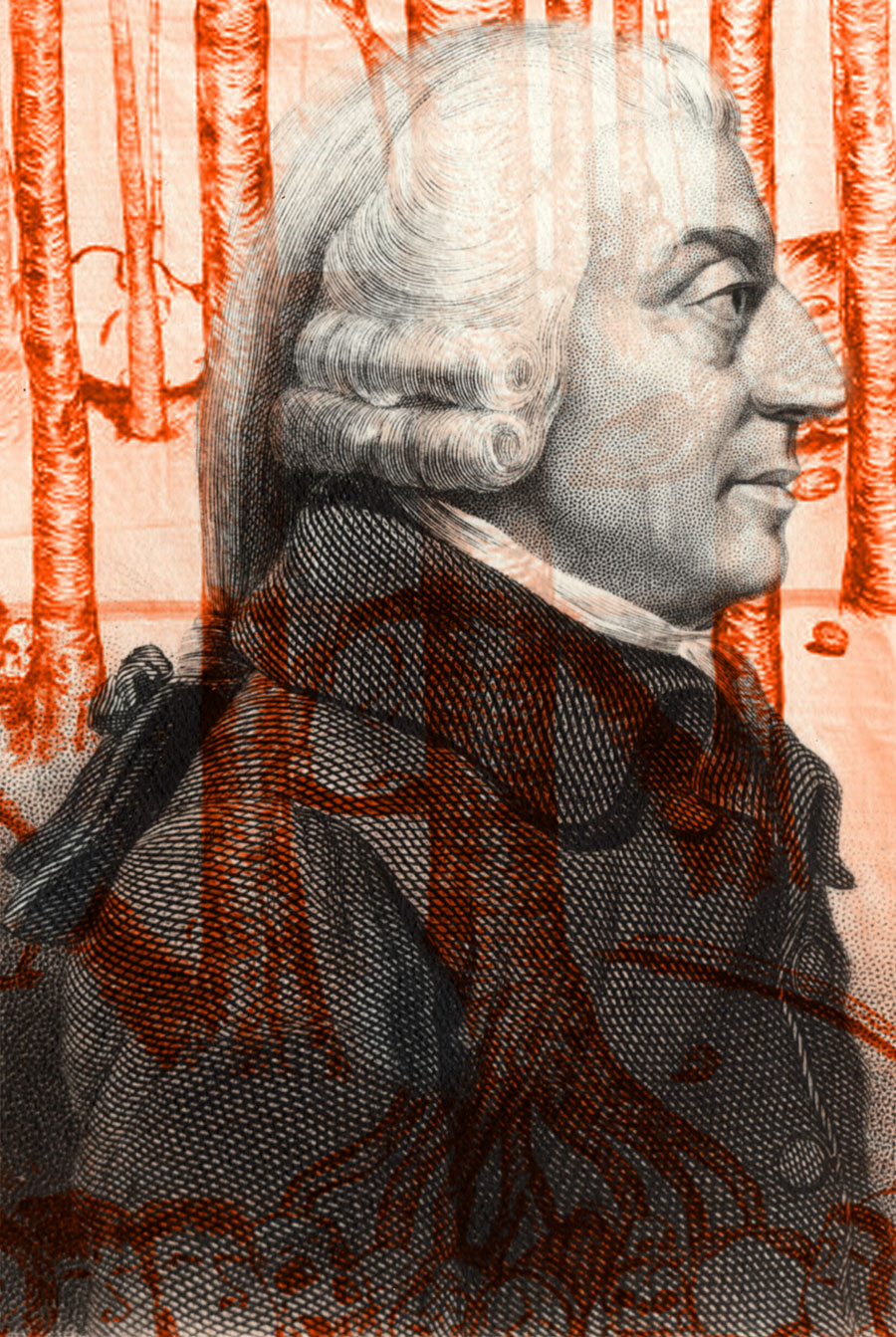
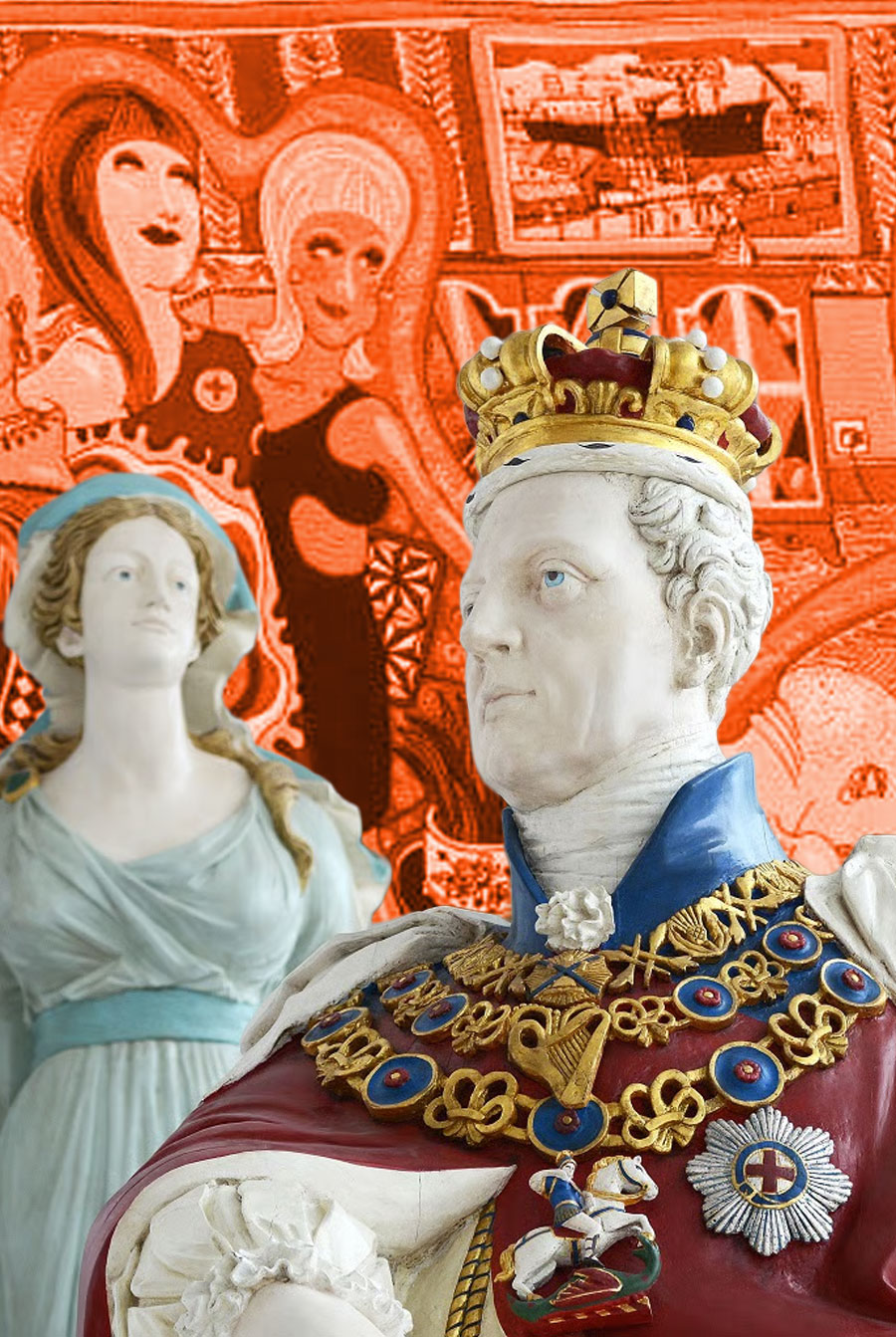
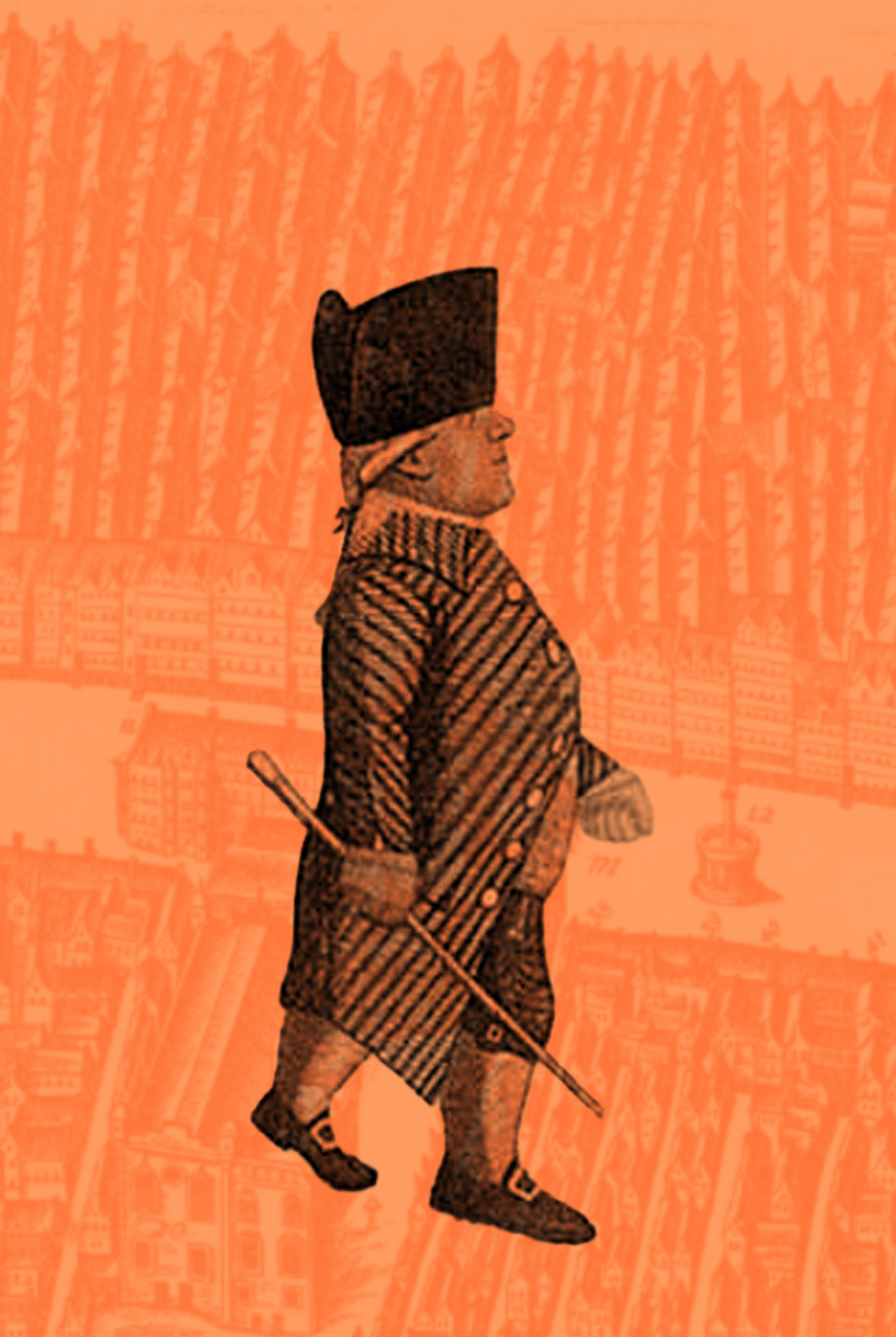
The exhibition was staged as a forensic investigation, laid out across trestle tables and the floor of a warehouse. It used archival images, films, interviews, and curatorial writing, documenting the loss of works by over 40 artists across the twentieth century, including Marcel Duchamp, Pablo Picasso, Willem de Kooning, and Tracey Emin. Visitors hovered above the space from a bird's-eye view, moving freely between tables, zooming down to read files, examine brushstrokes, and watch interviews with artists and curators.
I worked with the multiple stakeholders, coordinating efforts across the curators, content researchers, designers, and the technical development team, on a project that, despite being digital-only, had the scale and content depth of a major Tate exhibition. The unusual nature of the work meant few conventions to fall back on: every decision about the interaction model, how content was paced, and how the destruction sequence unfolded was bespoke.
I specified and built the custom infrastructure that supported the translation of curatorial material into digital interpretation, and worked the UI and UX concepts through to a refined and robust final product.
Lost Art won the Museums + Heritage Innovation Award. In keeping with the theme of destruction, over the course of the run, the exhibition was progressively destroyed: lights dimmed, tables removed, until only chalk outlines remained.